IA InsiderAlgorithms over intuition. Data over dogma.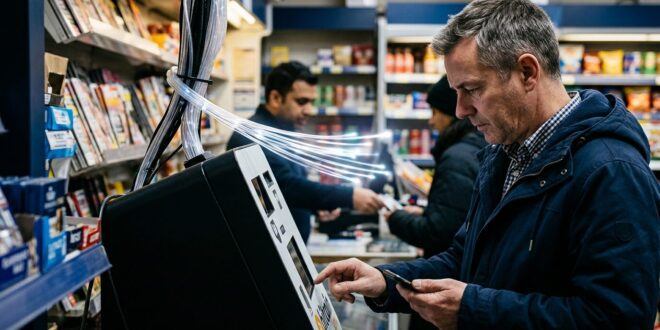
The Evolution of Physical Crypto Access in the British Capital
In 2026, the intersection of physical retail and decentralized finance has reached a critical maturation point. While the global narrative often focuses on purely digital interfaces, the presence of Bitcoin ATMs in London retail shops remains a significant, albeit highly regulated, pillar of the city’s digital wealth infrastructure. We observe that despite the ubiquity of smartphone-based exchanges, a distinct segment of the market—ranging from privacy-conscious high-net-worth individuals to unbanked retail participants—continues to utilize these physical portals for immediate liquidity. Data from the first quarter indicates that physical terminal transaction volumes in London have stabilized after the regulatory volatility of 2024 and 2025, suggesting that these machines have found a permanent niche in the urban financial landscape.
At IA Insider, we analyze these trends through the lens of algorithmic efficiency and market access. The persistence of physical hardware in a “digital-first” world isn’t an anomaly; it is a response to the demand for tangible entry points into the blockchain ecosystem. For many investors, the ability to convert fiat currency into digital assets within a familiar retail environment offers a layer of psychological security that purely virtual platforms sometimes lack. However, the operational reality of these machines is governed by the strictest compliance frameworks the UK has ever seen, following the comprehensive implementation of the Financial Services and Markets Act updates that finalized in late 2025.
Regulatory Compliance and the FCA Framework for Physical Terminals
The operational landscape for Bitcoin ATMs in London retail shops underwent a radical transformation between 2024 and 2025. Following a period of aggressive enforcement by the Financial Conduct Authority (FCA), every active terminal must be operated by an entity registered under the Money Laundering, Terrorist Financing and Transfer of Funds Regulations. This has effectively purged the market of “gray area” operators, leaving only highly capitalized fintech firms that can maintain the rigorous Know Your Customer (KYC) and Anti-Money Laundering (AML) standards required by the state.
For the user, this means that the experience of using a terminal in a London shop is no longer anonymous. Currently, a standard transaction requires biometric verification or a scanned government ID, linked instantly to the operator’s central compliance engine. While this has increased the time-to-transaction by approximately 120 seconds compared to the unregulated era of the early 2020s, it has significantly reduced the risk of fraud. We see that the average management time for a new user registration at a retail terminal has been optimized to under five minutes, thanks to the integration of real-time identity verification APIs that have become industry standard over the last two years.
The Role of Retail Partners in the Digital Wealth Chain
Retailers hosting these machines are no longer just passive landlords; they are integrated nodes in a digital wealth network. Currently, shop owners in districts like Shoreditch, Canary Wharf, and Mayfair undergo specific due diligence to ensure the physical security of the hardware. The incentive for the retailer has shifted from simple rent to a commission-based model where they earn a micro-percentage of the transaction spread, which, given London’s high footfall, represents a consistent secondary revenue stream with zero inventory risk.
Comparative Analysis of Digital Asset Acquisition Methods
| Acquisition Method | Avg. Fee | Liquidity Speed | Regulatory Safety | Privacy Level |
|---|---|---|---|---|
| Retail Bitcoin ATMs | 7% – 12% | Instant (Physical) | High (FCA Regulated) | Low (Biometric KYC) |
| Centralized Exchanges | 0.1% – 1.5% | T+1 (Bank Transfer) | High | Low (Full KYC) |
| P2P Platforms | 2% – 5% | Variable | Moderate | Medium |
| Neo-Bank Integrations | 1.5% – 3% | Instant (App-based) | Very High | None (Bank Linked) |
Psychological Pitfalls and Investor Misconceptions
As an analyst mapping the digital financial currents, I, Alistair Finch, often observe that investors fall prey to specific cognitive biases when interacting with physical crypto infrastructure. The most prevalent is the “Convenience Bias.” Investors often prioritize the immediate physical presence of a machine over the significant fee spread. While a 10% fee might seem negligible for a small £50 transaction, it represents a massive drag on long-term portfolio performance for those attempting to “stack sats” via retail terminals regularly.
Another common error is the “Anonymity Myth.” Many retail participants in London still operate under the outdated 2022 assumption that Bitcoin ATMs in London retail shops offer a way to bypass the banking system’s gaze. Currently, this is factually incorrect. Every transaction is logged, and under the “Travel Rule” implemented globally in 2024, data regarding the sender and receiver is shared between institutions. Attempting to use these machines for tax avoidance is a strategic failure that ignores the transparent nature of the modern blockchain-ledger-plus-regulatory-oversight combo.
Technical Guide: Executing a Transaction
For those looking to utilize these terminals as part of a diversified digital wealth strategy, the process has been streamlined into a four-stage protocol. We recommend following these steps to ensure maximum security and efficiency:
- Verification: Ensure the machine displays the FCA registration number of the operator. Currently, legitimate machines include a QR code that links directly to the FCA’s Financial Services Register.
- Wallet Preparation: Always use a non-custodial mobile wallet. Before approaching the terminal, ensure your receive address is generated and your device has sufficient battery.
- Tiered Limits: Be aware of the daily limits. Most London terminals cap unverified (basic ID) transactions at £250, with higher limits requiring enhanced due diligence.
- Confirmation: Retain the physical or digital receipt. In the event of a network congestion delay (though rare due to Layer 2 integrations like Lightning), this receipt is your only legal claim to the transaction.
Strategic Insights from the IA Insider Observatory
How are capital gains calculated for ATM purchases?
In the UK, the tax treatment of assets bought via Bitcoin ATMs in London retail shops is identical to those bought on exchanges. Capital Gains Tax (CGT) applies to the difference between the purchase price (including the high ATM fee, which can be deducted as an acquisition cost) and the disposal price. We advise investors to keep precise records, as the high fees associated with physical terminals can actually serve to reduce the taxable gain upon eventual sale.
Why do spreads remain high despite increased competition?
The spread—often between 7% and 12%—is a reflection of the high operational overhead. This includes physical security, cash-in-transit (CIT) logistics, retail space leasing, and the cost of maintaining 24/7 regulatory compliance software. Currently, these costs have not decreased significantly, as the price of secure physical logistics in London has risen in line with inflation over 2024 and 2025.
Are these machines compatible with the Lightning Network?
Yes, the majority of modern terminals in London now support Layer 2 protocols. This allows for near-instant confirmation of transactions, mitigating the historical risk of waiting 10 to 60 minutes in a retail shop for a blockchain confirmation. This technological leap has made physical ATMs a viable option for those needing immediate “spendable” liquidity.
What is the risk of “Phantom Terminals” in the current market?
While the 2024 crackdown eliminated most fraudulent machines, investors should still be wary of social engineering. A legitimate Bitcoin ATM will never ask for your private keys or seed phrase. Currently, if a machine in a London shop requires you to input your recovery words to “verify your account,” it is a malicious device and should be reported to the authorities immediately.
Conclusion
The presence of Bitcoin ATMs in London retail shops is a testament to the enduring need for physical-digital bridges. For the sophisticated investor, these machines should be viewed not as a primary acquisition tool—due to the prohibitive fees—but as a strategic emergency valve or a convenient entry point for small-scale diversification. To optimize your position, we recommend the following:
- Limit ATM usage to less than 5% of your total acquisition volume to avoid fee-induced portfolio erosion.
- Always cross-reference the machine’s exchange rate against the global spot price displayed on IA Insider to calculate the true “convenience premium” you are paying.
- Utilize the high transaction fees as a deductible expense in your annual tax filings to offset capital gains.
The information presented in this analysis is based on market data and regulatory frameworks. It is intended for educational purposes only and does not constitute financial, investment, or tax advice. The digital asset market remains highly volatile, and the use of physical terminals involves specific fee structures and regulatory requirements that may impact individual financial outcomes. We strongly recommend consulting with a qualified financial advisor or a tax professional specializing in digital assets before executing significant transactions.